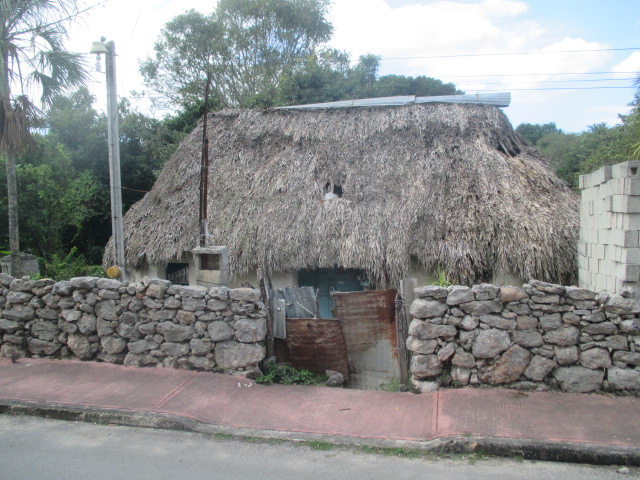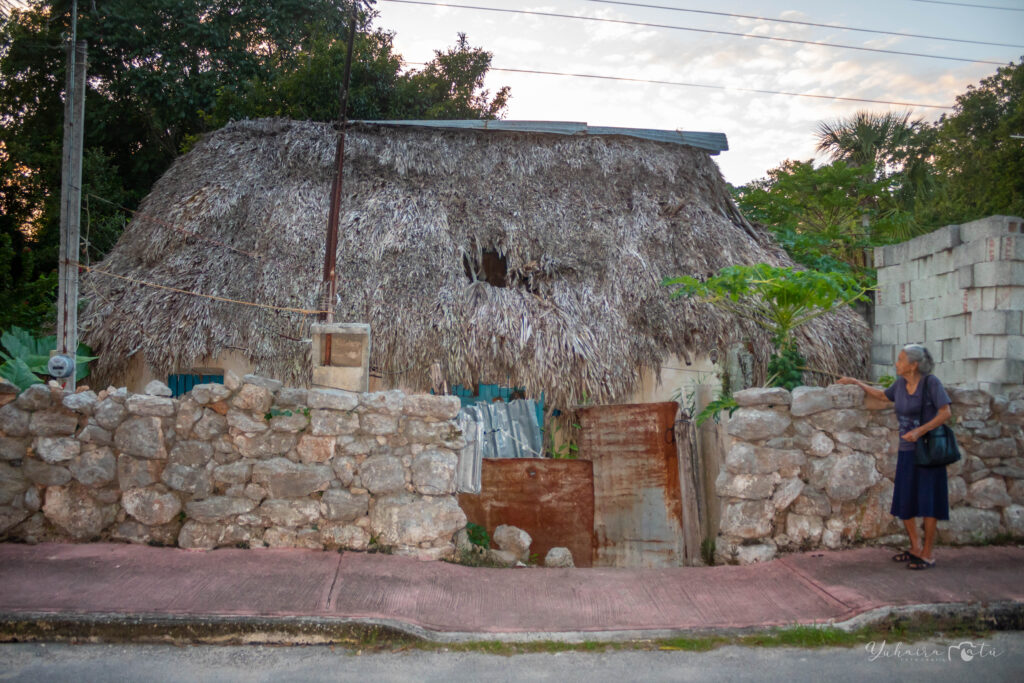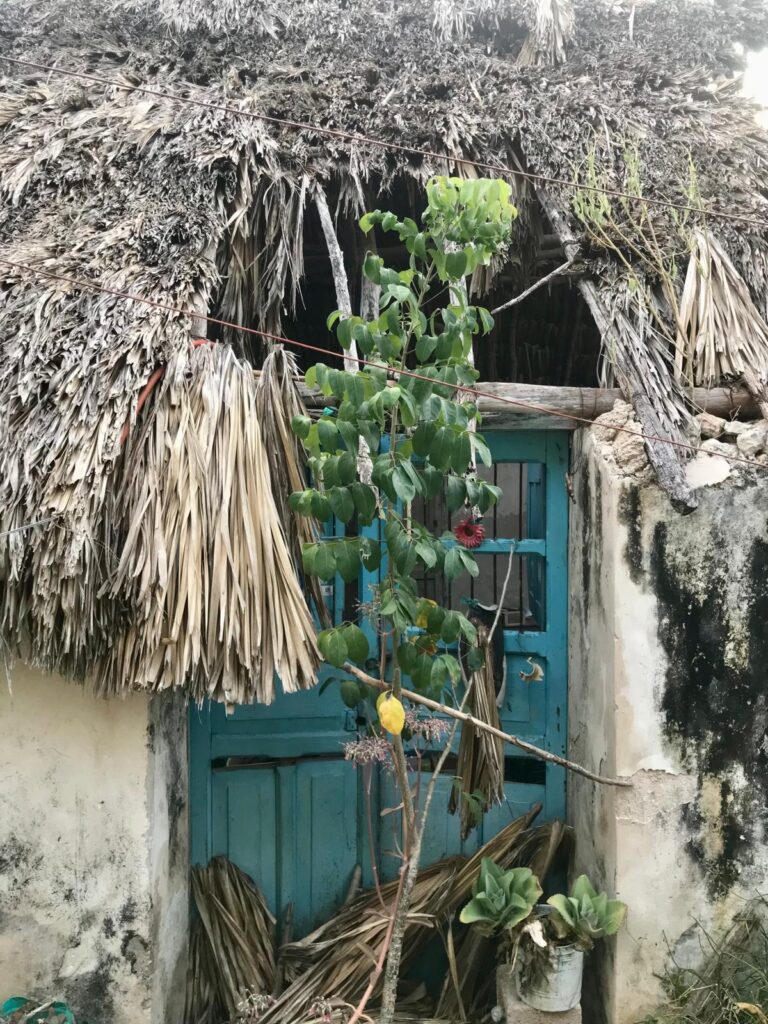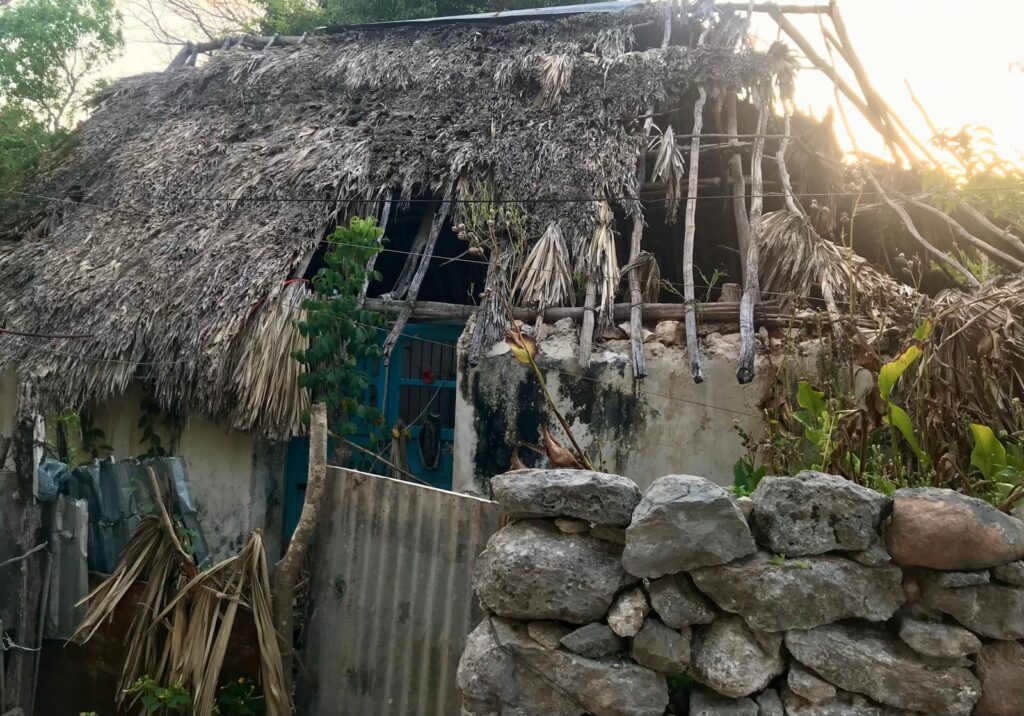
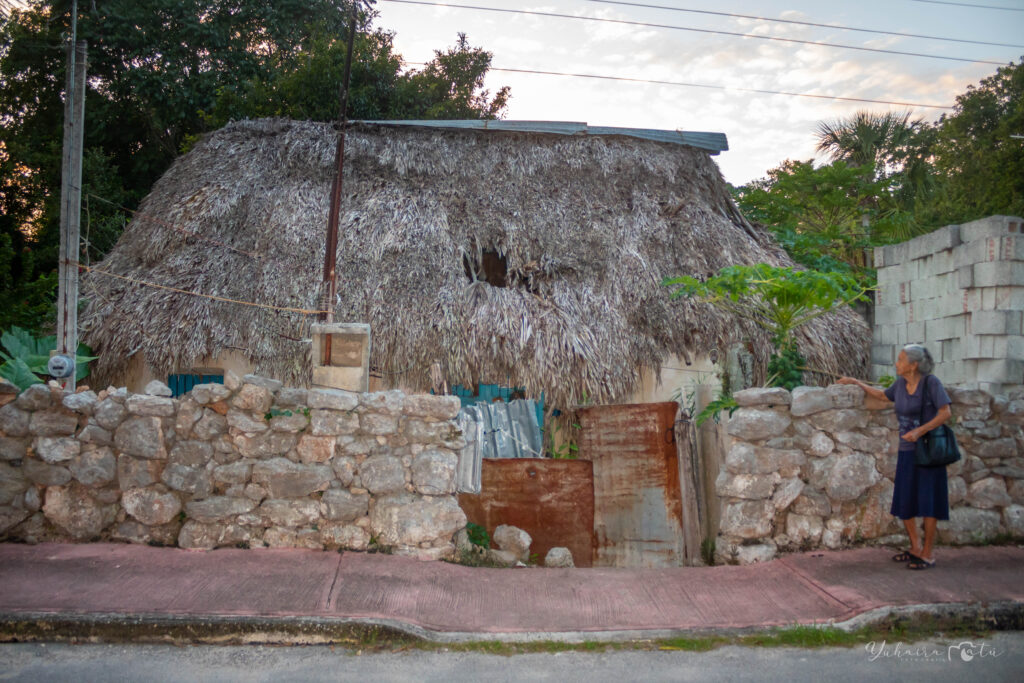
This characteristic house has a blue door, which was constructed around one century ago by the father of the current owner, and has the traditional mamposteria white walls with a smooth finish, or “acabado”, and a traditional stone wall surrounding the property. Behind the main house, there is another structure that appears to have been used as a chicken coop at one time, but actually had once been used as a spare room where the family rented hammock space for visitors who had come to enjoy the community events that still occur throughout the year in Chicxulub Pueblo, such as the Corrida de Toros and the Vaqueria Dance at each Fiesta del pueblo: Reconocimiento de la Candelaria in February, La Fiesta de Santa Cruz in May, and other annual community gatherings and celebrations.
Esta característica casa tiene una puerta azul, construida hace aproximadamente un siglo por el padre del actual propietario, y cuenta con las tradicionales paredes blancas de mampostería con acabado liso o “acabado”, además de un muro de piedra tradicional que rodea la propiedad. Detrás de la casa principal, hay otra estructura que parece haber sido utilizada como gallinero en algún momento, pero que en realidad fue una habitación de invitados donde la familia alquilaba hamacas para los visitantes que venían a disfrutar de los eventos comunitarios que aún se celebran durante todo el año en Chicxulub Pueblo, como la Corrida de Toros y el Baile de Vaquería en cada Fiesta del pueblo: Reconocimiento de la Candelaria en febrero, la Fiesta de Santa Cruz en mayo y otras reuniones y celebraciones comunitarias anuales.
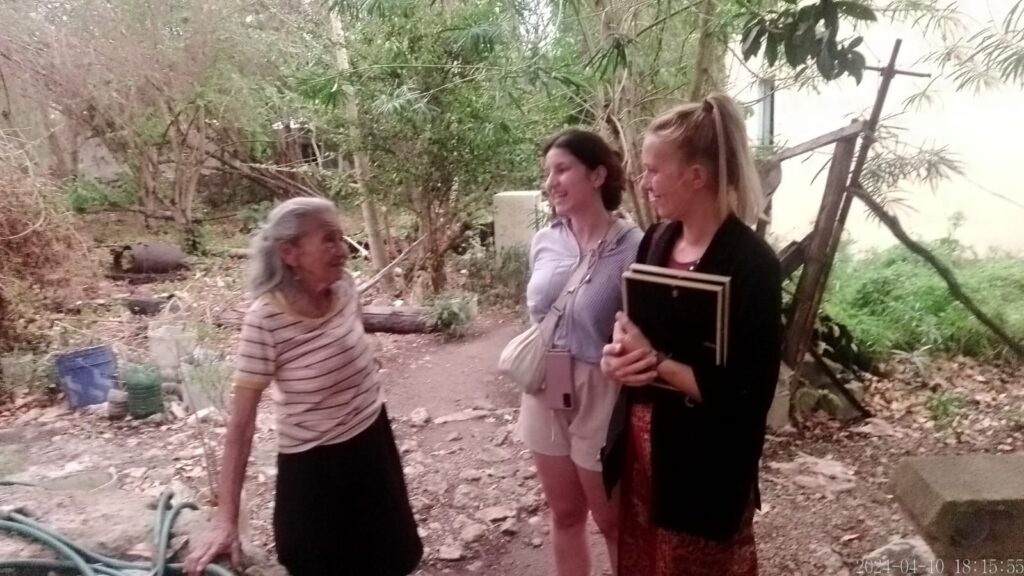
These days, the owner of the house is Doña Maria Socorro and she lives in the concrete constructed small-home on the property. Doña Soco grew up in this home with her brothers and sisters who still live nearby. Though Doña Soco is an independent person who loves the traditional home her father built, she has been unable to maintain the traditional roof on her own. The truth here, which is quite common throughout the peninsula, younger generations in the family prefer the comforts of a modern home with cement block construction, which require little to no maintenance and can better withstand the rainy season and the hurricane that will eventually touch down here again.
Actualmente, la dueña de la casa es Doña María Socorro y vive en la pequeña casa de concreto de la propiedad. Doña Soco creció en esta casa con sus hermanos y hermanas, quienes aún viven cerca. Si bien Doña Soco es una persona independiente que ama la casa tradicional que construyó su padre, no ha podido mantener el techo tradicional sola. La verdad, bastante común en toda la península, es que las generaciones más jóvenes de la familia prefieren la comodidad de una casa moderna con construcción de bloques de cemento, que requiere poco o ningún mantenimiento y resiste mejor la temporada de lluvias y el huracán que eventualmente volverá a tocar tierra.
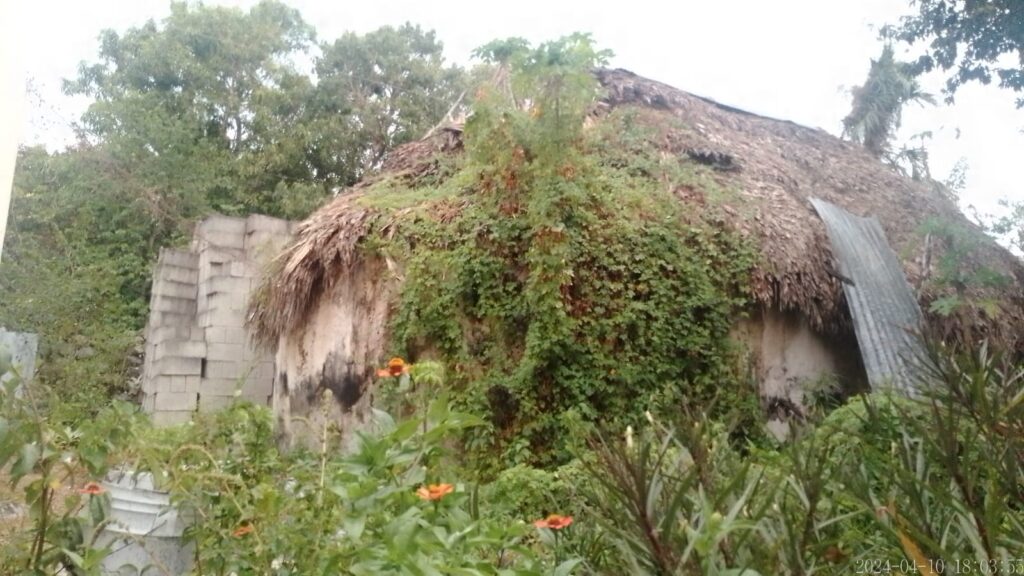
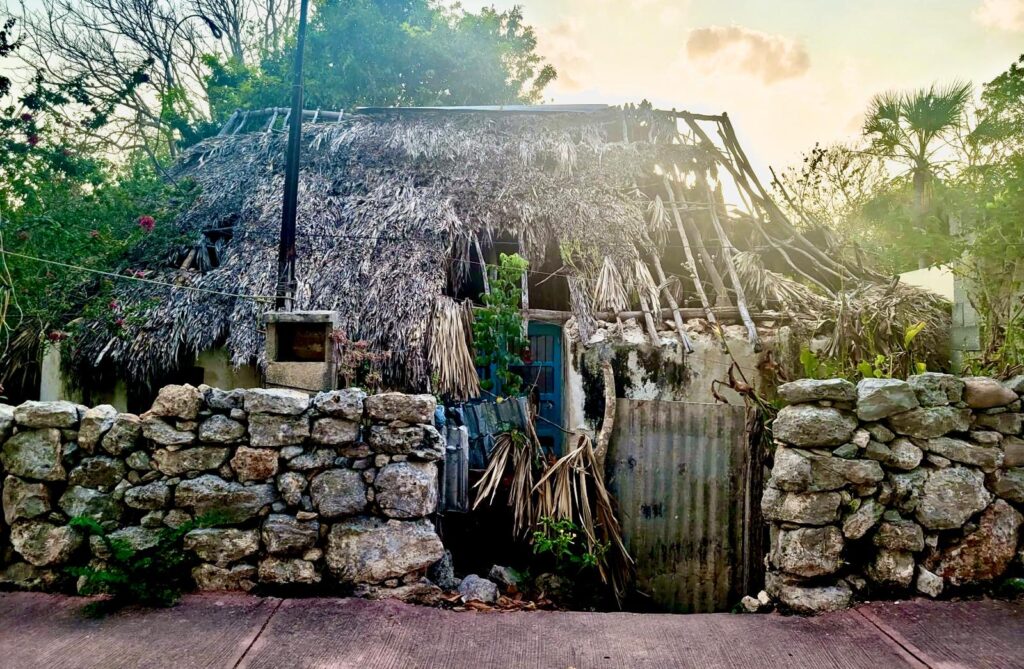
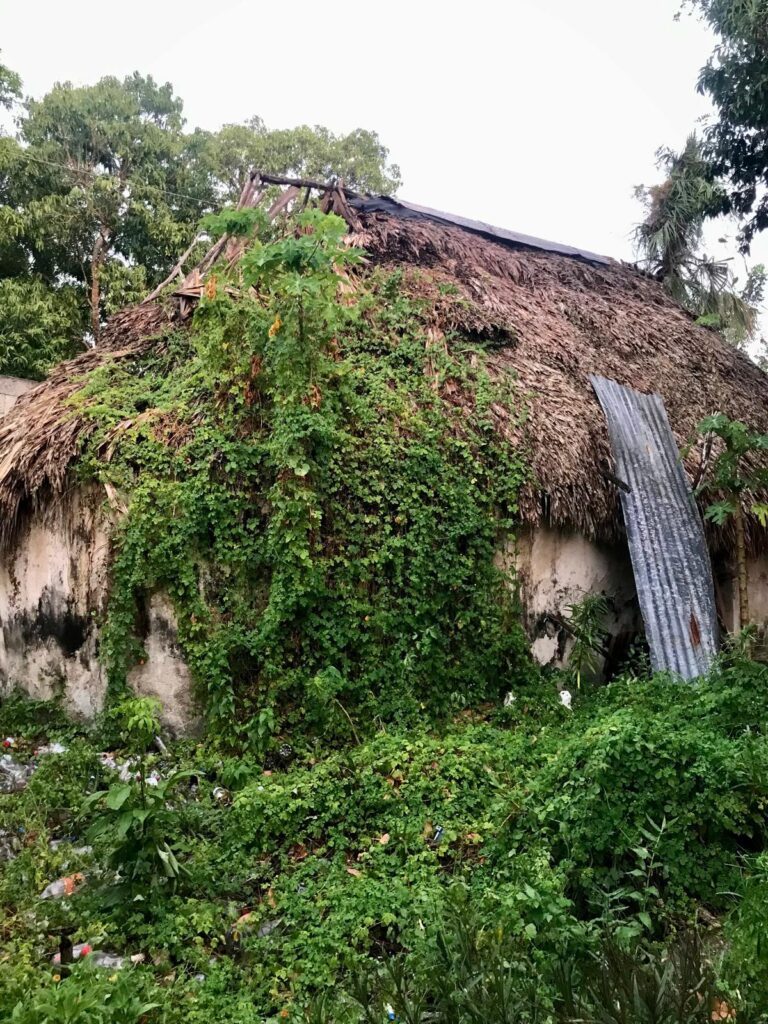
Since 2021, when we first interviewed Doña Soco, the house has suffered significant damage to the roof due to a lack of maintenance. Many huano leaves have become brittle, while the majority of them have fallen in the house to expose the wood structure below, which has also begun to deteriorate. The north side of the home has also started to fall-in due to years of strong winds and heavy rainfall during the monsoon season and super dry conditions the rest of the year, leaving the home open and exposed to the elements allowing even more rainwater to come in and further ruin the roof structure of natural materials. However, because the walls and doors can withstand far more than its roof, this home can still be rescued with help from people like you and I.
Desde 2021, cuando entrevistamos por primera vez a Doña Soco, la casa ha sufrido daños significativos en el techo debido a la falta de mantenimiento. Muchas hojas de huano se han vuelto quebradizas, y la mayoría se han caído dentro de la casa, dejando expuesta la estructura de madera, que también ha comenzado a deteriorarse. El lado norte de la casa también ha comenzado a derrumbarse debido a años de fuertes vientos y lluvias torrenciales durante la temporada de monzones y a condiciones extremadamente secas el resto del año, dejando la casa abierta y expuesta a la intemperie, permitiendo que entre aún más agua de lluvia y estropee aún más la estructura del techo de materiales naturales. Sin embargo, como las paredes y las puertas resisten mucho más que el techo, esta casa aún puede salvarse con la ayuda de personas como usted y yo.