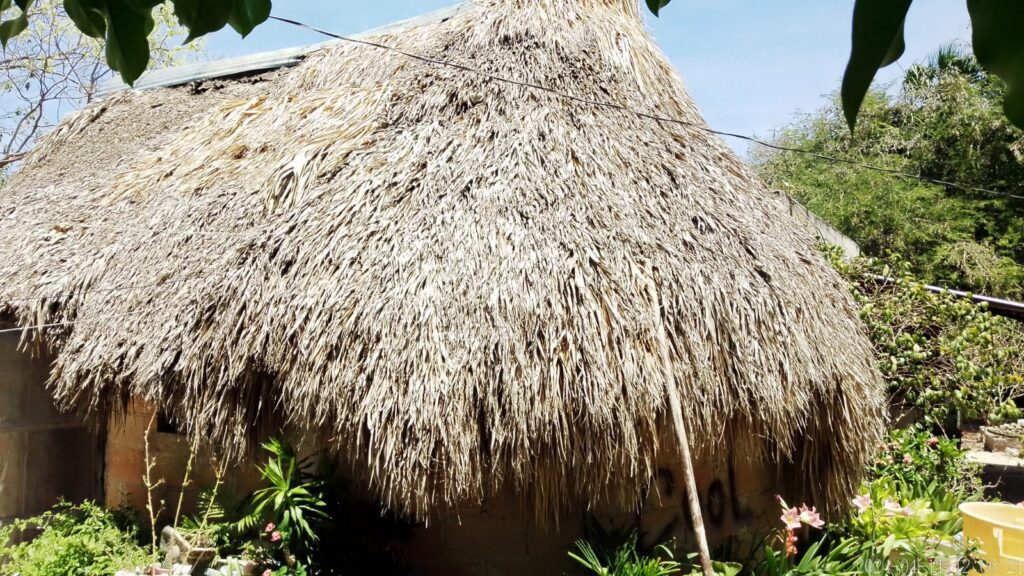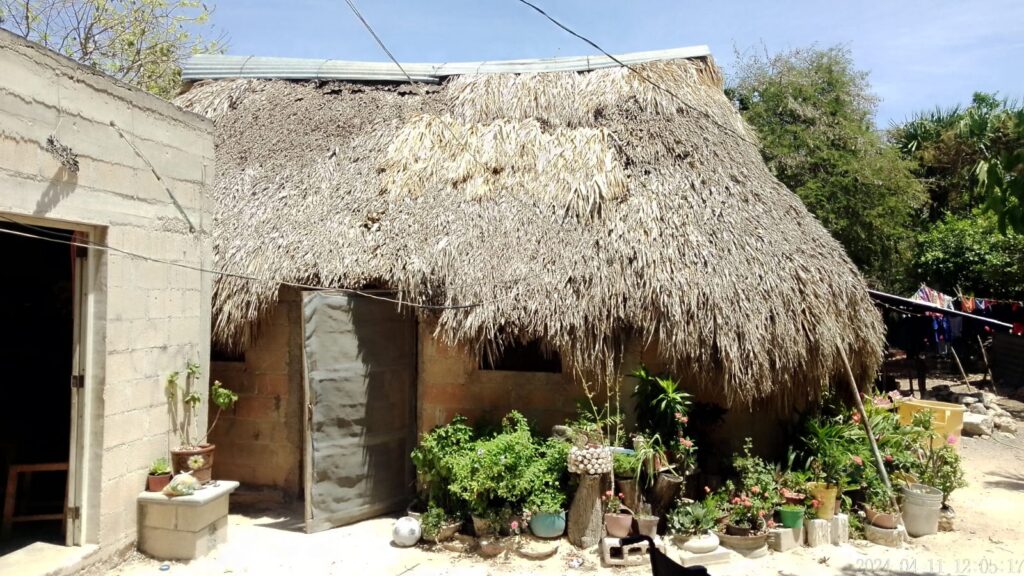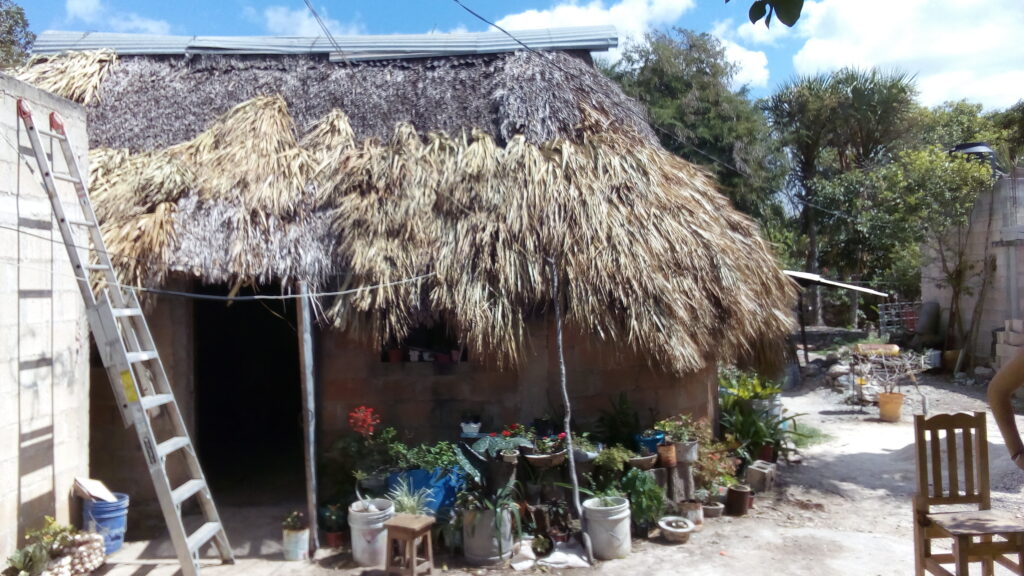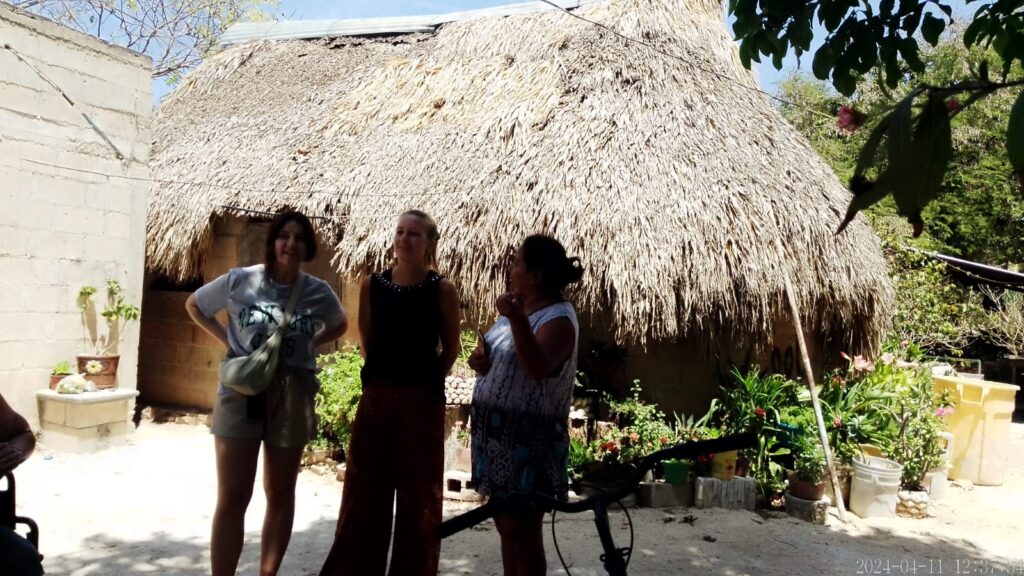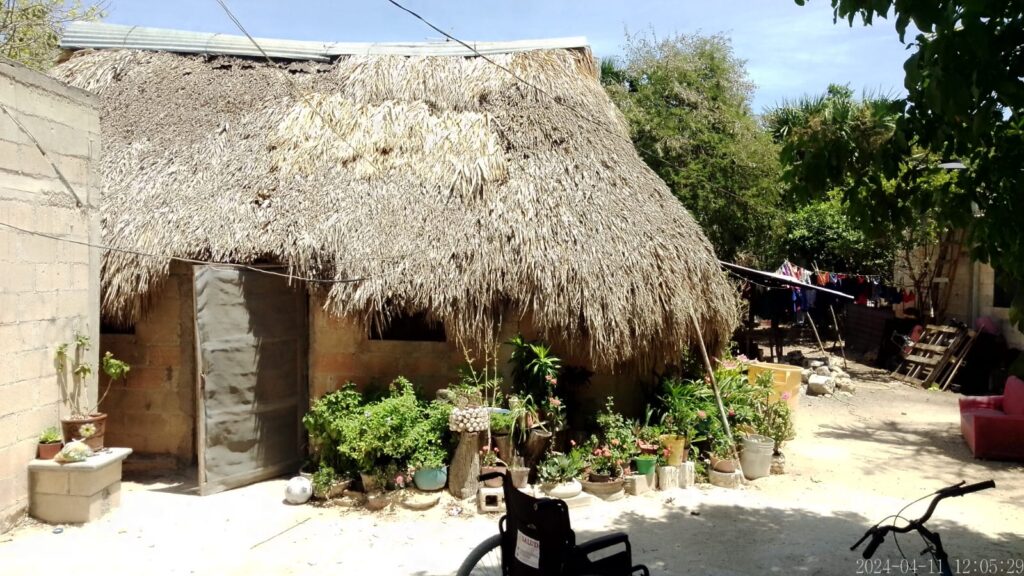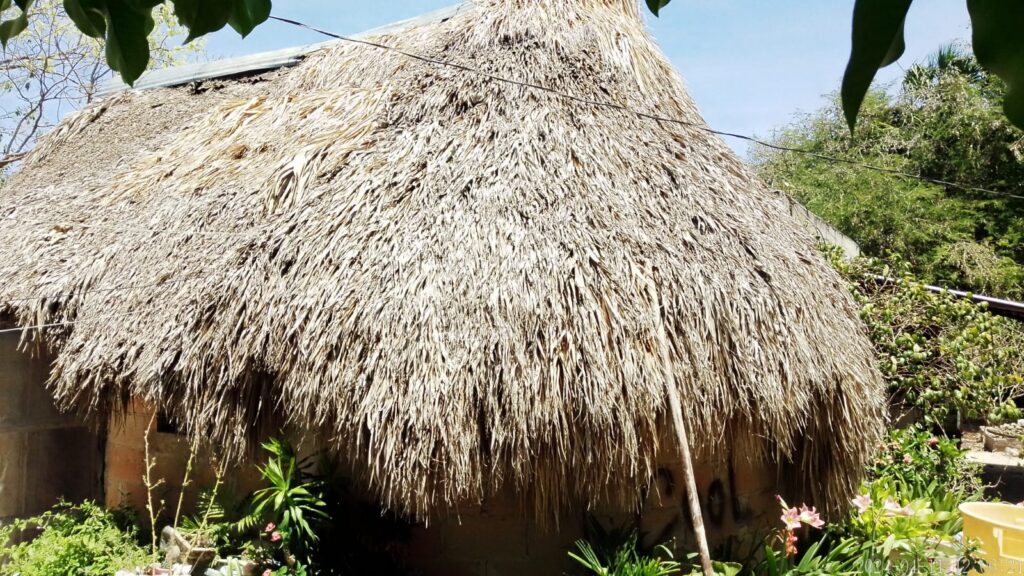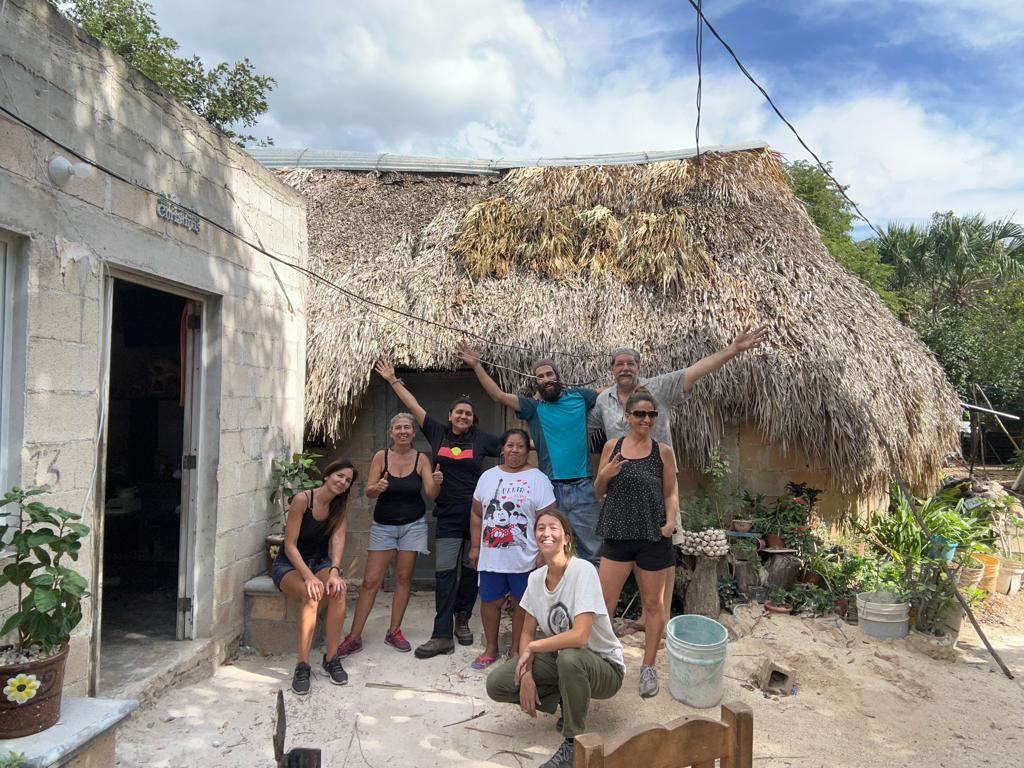
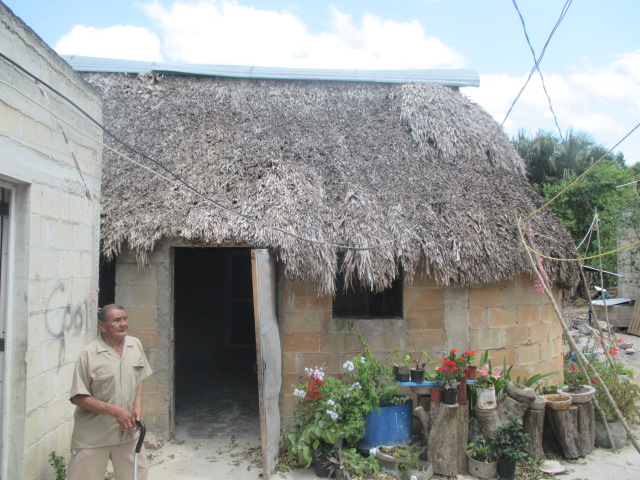
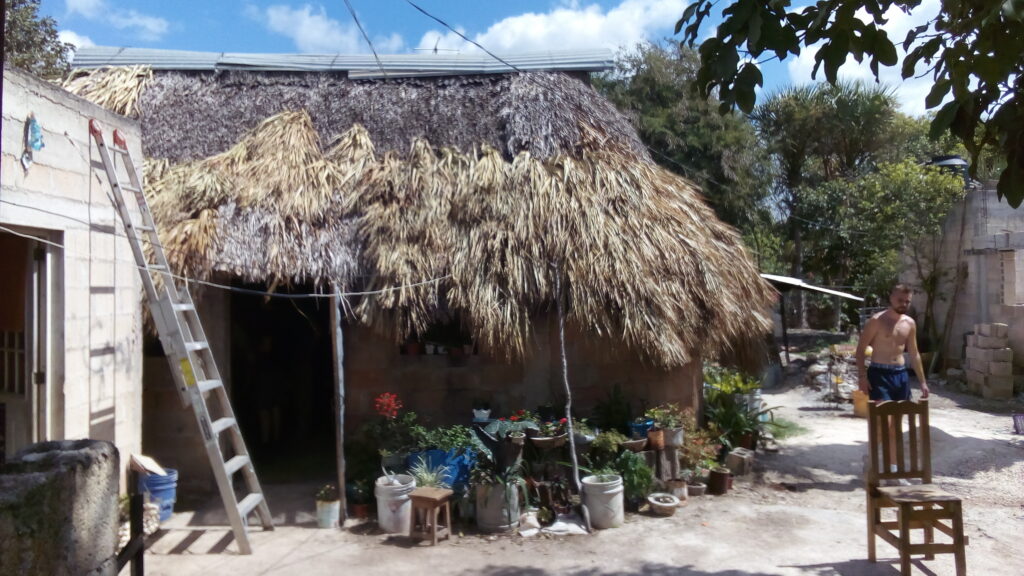
Con vista a la calle, esta casa maya es la hermosa entrada a la casa principal, con su techo de concreto detrás. Los cuatro nichos interiores, ocultos al visitante, son un detalle único de Casas Mayas. La puerta principal de madera verde y blanca es la parte más antigua que se conserva de la casa original. La Casa Redonda fue construida por Don Pistola y sus hijos mayores cuando se mudó con su familia a Chicxulub Pueblo desde la cercana Hacienda Baspul.
Facing the street, this Mayan house is the beautiful entrance room to the main house with the concrete roof behind it. Not visible to the user of this tour are the four niches inside the house, a very unique detail for Casas Mayas. The green and white wooden front door is the oldest remaining part of the original house. The Casa Redonda was built by Don Pistola and his older children when he moved his family to Chicxulub Pueblo from the nearby Hacienda Baspul.
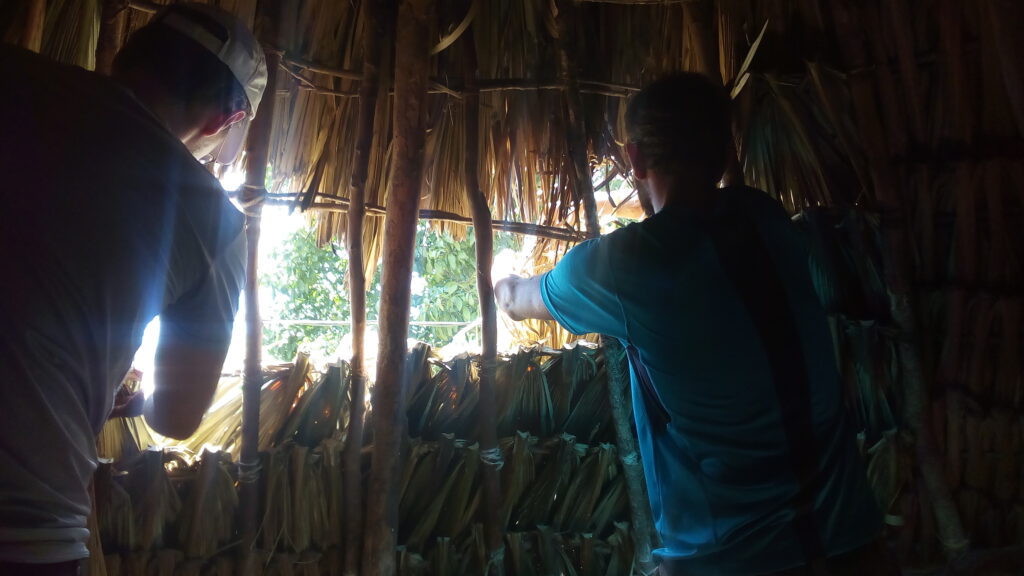
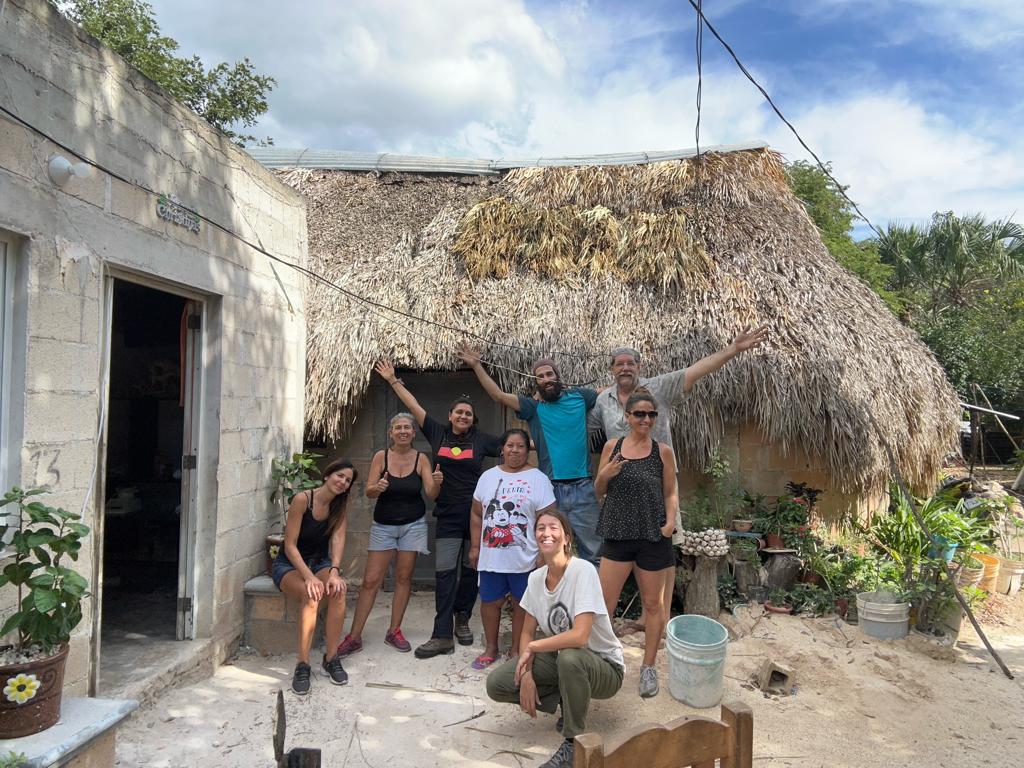
Es interesante notar que las paredes de esta casa maya no necesariamente soportan la estructura del techo de huano. En esta casa, por ejemplo, la familia terminó primero la estructura del techo y completó las paredes solo después de mudarse. Según una de las hijas de Don Pistola, una de las razones para mudarse temprano fue la motivación para terminar la casa rápidamente. Don Pistola enseñó a sus 16 hijos a construir y reparar techos de huano, convirtiéndolos en importantes guardianes de esta tradición maya. Aún hoy, la familia está bien preparada: siempre hay hojas secas de huano dentro de la casa, listas para servir como material de reparación en caso de goteras.
It is interesting to note that the walls of this Mayan house do not necessarily support the huano roof structure. In this house, for example, the family finished the roof structure first and completed the walls only after they already moved in. According to one of Don Pistola’s daughters, one of the reasons for moving in early was to be motivated to finish the casa quickly. Don Pistola taught all of his 16 children how to build and repair huano roofs, making his sons and daughters important keepers of this Mayan tradition. Still today, the family is well prepared: There are always some dry huano leaves inside the house ready to serve as repair material in case that the roof might leak.